The horizon is not so far as we can see, but as far as we can imagine

Category: Securities Page 1 of 3

Information Overlord: Houthis Roll, Hegseth Bumbles, AI Doomer Hype, Lots of Music Talk

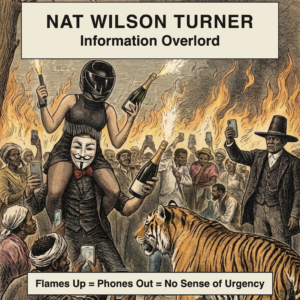
Nat Wilson Turner = Information Overlord = Flames Up = Phones Out = No Sense of Urgency

From me this week as Nat Wilson Turner

This week at Naked Capitalism I pulled a shift covering the Iran War and tried to connect the dots between Pete Hegseth’s Department of War and what’s going on with Meta and OpenAI.

I also continued my “Joe Biden’s Three Genocides in Four Years” series with the first installment of the Ukraine debacle.

More of what I wrote and recorded for The MMA Draw and The Let It Roll Podcast is at the bottom of this post but I wanted to feature the news links and think pieces.

What I’m Reading and Watching

The Iran War

  • The Iran War Has Just Had A Major Phase ChangeIan Welsh. On the interceptor math: the US runs out long before Iran does if Iran chooses to go all out, and hitting only three or four tankers a day was a choice rather than a ceiling.

“As I said day one of the war, the math is on Iran’s side: the US will run out of interceptors long before Iran if Iran chooses to go all out.”

Empire, and what it remembers

The AI trade

The AI Doomers really had their moment this week. I hope y’all know most of that crap is as overblown as the hype.

Money

What the heck is going on with the bond market, private equity, etc


SpaceX’s Rug Pull Is Making Me Laugh

So, SpaceX’s stock is down to $108. It started at $150. It spiked as high as $225. (Hope you didn’t buy it then.)
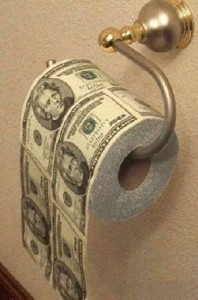
Ouch.

This was completely predictable, because SpaceX doesn’t have a product worth its MASSIVE valuation. Everything was done to spike SpaceX’s initial offering, including letting it into multiple indices, which means that pension funds and so on were forced, in effect, to buy it.

Meaning your pension fund just took a huge loss.

The key to SpaceX’s valuation, such as it is, is reusable rockets.

But…

The news comes just days after Chinese state-run media showed a Long March 10B rocket booster being caught by an offshore recovery platform, indicating the country was making major strides in catching up with SpaceX’s reusable rocket tech. Over the weekend, an experimental Japanese reusable rocket safely took off and landed, suggesting the nation may be right behind China as well.

Beyond some steepening international space launch competition, experts believe SpaceX’s transformation into an “AI play” may be closely related to its Wall Street woes, as the BBC reports.

“Everyone saw SpaceX as an AI story,” CFRA investment research analyst Keith Snyder told the broadcaster.

“With Elon Musk, any company he touches gets people excited,” he added. “But this was also the first time people felt like they were able to invest in something that was being marketed as an AI play.”

I predicted years ago that Musk didn’t have a moat on reusable rockets. The problem is simple: once the Chinese get a tech, they an always scale much better than competitors, because they have a robust, low priced industrial sector due to actually having competitive markets and useful industrial policy.

As for X being an “AI stock”, well, generally Grok is and has remained by behind most other major AIs in performance benchmarks. There’s no particular reason to believe it’s going to win the AI race, and it’s expensive and closed source, so how it’ll make a profit is unclear to me.

Musk is the world’s greatest conman. Oh, he’s done some important stuff, but it’s been years now since he actually pulled off anything major and real: electrical cars, batteries, reusable rockets are all well in the past. Tesla is only kept alive by the refusal of the US and EU to let much cheaper Chinese EVs into their markets. Spaceship keeps failing. Musk is personally toxic with the sort of people who buy EVs in Europe and the US: liberals and left wingers who believe in climate change.

Anyway, I hope you didn’t buy SpaceX unless you were taking advantage of the rug pull to do a short term trade.

This is just another example of “make the rich, richer” and American delusional belief in their own superiority. Musk is the world’s first trillionaire, but he isn’t going to stay that way.


What I write here is for the benefit of everyone, but alas, I live in capitalism and I, and the site, take money to keep running. If you value the writing here and can, please subscribe or donate.

The Credit Cycle: Phase Two Accelerating

~by Sean Paul Kelley

Here are today’s Phase Two developments. Many are ominous. Things not looky so goody.

The smartest guys in the room, i.e., Goldman Sachs had this to say about AI: “Massive investment in AI contributed basically zero to US economic growth last year.” What will they predict next? An oil price spike if we go to war with Iran? Oh wait. 

Dario notes that the liquidity crisis is going global: “Middle East liquidity crisis in the financial system is surfacing.”

He cites Rashid ben Saeed who elaborates: “Citi and Standard Chartered literally evacuated their offices this week. Told staff go home, work remote. HSBC closed their Qatar branches. Hedge funds are in “contingency mode.” That’s a polite way of saying they’re bricking it. Analysts are saying customers could pull out $307 BILLION if this goes on another month.” 

First Squawk writes that both JP Morgan and Goldman are offering Hedge Funds ways to short private credit. That’s just weird.

Ripplebrain conveys just how devastating the attack on QatarEnergy’s LNG production is:17% of QatarEnergy’s production is 3.4% of the world’s LNG production.” Ending ominously saying, that it’s “gone in the blink of an eye, perhaps for years.”

The irrepressible Matt Stoller highlights a video that highlights “straightforward market manipulation.He also points our attention to the #2 story at the Wall Street Journal:U.S. Regulators Propose More Lenient Capital Rules for Big Banks.” This kind of proposal is in direct contravention to the ‘stress test’ rules put in place after the 2008 Financial Crisis. It also clearly foreshadows liquidity and/or solvency issues that the commericial banks will soon face. 

In another clear phase two clusterfuck is this story from the WSJ, cited by Unicus Research. The upshot: “Stone Ridge’s LENDX fund just told investors it would honor only 11% of redemption requests.” The post on X also includes what kind of garbage is in the fund. Go take a look. It’ll engender a ton of schadenfruede. Enjoy! 

As pending crises morph into full blown disasters investment banks often prepare by enacting the following policies. First, they raise production quotas for their employees while simultaneously cutting their commission payouts. It’s a cut-throat business. Payout cuts are painful. I’ve lived it. And they always cut payouts right before or during bear markets. I endured this twice at Morgan Stanley. Guess what: Goldman has begun that process, as First Squawk reports: “Goldman plans performance-based job cuts in late April.” This we can infer two important factoids from this: Goldman is worried about cash-flow. You don’t plan to run employees off if you’re flush with cash. Two: timing, Goldman clearly sees this credit cycle accelerating rapidly with an April inflection point.

Shashank Joshi catches an excellent highlight from the Economist:Average prices of petrol and diesel have reached $3.88 and $5.09 a gallon, compared with $3.11 and $3.72 at Mr Trump’s inauguration. Republican support for the war is strong, but softening.”

More Perfect Union informs us “the cost of vegetables jumped 49% last month as inflation hit hard and companies raised prices.” Its source is BLS data. Now I know, some will dispute how the CPI is computed. I thinks it full of balderdash and male bovine excrement. So does Ian. So I post and you decide. 

Sohrab Ahmari notes, unconfirmed but entirely plausible, that “force majeur [has been declared] on Qatari LNG contracts for up to five years.” Five years? That’s going to pile Pelion atop the already messa Ossa of the energy markets globaly. 

CORRECTION: according to EarlyGray the video below does not say anything about Japan buying Russian oil. Mea culpa. I regret the error. SPK

Richard posts a video and apparently translates it. If true, it’s a bombshell: “Japan is now openly buying Russian oil with the yuan.” Why not with JPY? I would imagine that China has already set up a Yuan based transaction system for buying and selling oil to steadily chip, chip, chip away at dollar hegemony. Yeah, Japan has said it publically and officialy. That’s pretty much like pissing on the petrodollar. Our closest North East Asian Ally. That’s fuckery on an hitherto unseen level. 

Meanwhile, to Japan’s northwest, South Korea is considering resuming imports of Russian oil.

And I make the observation, in utterly obscene Russian fashion that “with these high oil prices the Russian Treasury has certainly Как бога за яйца поймал.” Translated idiomatically: Russia is in the catbird seat. Translated directly:they got God by the balls.

Rory Johnston notes just how high Dubai crude prices have risen: “Cash Dubai crude (balance of the month) just broke above $170 per barrel.”

Here’s what I’ve previously written on this credit cycle. I stand by it all. The only comment I’ll add at present is this: if the exogenous shocks to the US economy continue and the energy shock intensifies, all bets are off on the proximate cause of the end of dollar hegemony.


Silver Short Take

Jaysus on a popsicle, Mary and all the Saints do I have some egg on my face. Since January 27 silver has been on one seriously wicked ride. I’ve been banging my head to Metallica’s Whiplash for the last ten days.

So, WTF happened?

In short: from where I sit the paper markets are trying to create a force majeure situaiton for March contracts. The market is incredibly volatile and highly illiquid. Traders are draining the vaults of bullion. Indeed, as Dario notes,Silver physical deliveries at the Comex just crossed 4,000 contracts (~20m/oz)and we are only 6 days into February.” That’s nucking futs. 

If the Comex defaults to force majeure (SHFE is a bit of a different matter) the Comex will lose all credibility as a fair functioning market dedicated to price true discovery. Never mind that silver prices in the USA has been a cozy Fed-supplied rentiers market for decades, should this happen businesses will begin a mad scramble to source silver for themselves. That leads to supply and demand chaos. Bad. Vewwy bad.

On the SHFE–Shanghai–one day last week over 1.3 billion ounces of silver volume were traded. That’s one year of global demand in a day. The Chinese government’s motto regarding traders shorting silver on the SHFE seems to be FAFO. The Chinese are cracking down hard. Why? Well, to produce one gigawatt of power using solar panels requires 1 million ounces of silver.

You read that right. One million ounces.

Fundamentals matter. Global demand is strong. Businesses need silver for industrial applications beyond just solar panels and dentistry. But traders can keel-haul fundamentals sometimes with epically shitty consquences. Watch this video by Dario starting at minute 6:43 for how this possibly plays out.

It’s ugly. And it seems to me that maintaining a viable silver market is now fully in the hands of the Chinese. US traders are determined to destroy price discovery and reinstate the cozy rentiers market in the US.

I have no idea how this will end.

How Should CEOs And Politicians Be Punished For the Evil They Do?

Came across this tweet about the Philadelphia water spillage the other day:

So, shit happens and sometimes truly, no one is really to blame. But a lot of bad things which happen are a result of deliberate negligence or direct action. A good example is PG&E, the California power utility, which hasn’t been bothering to clear the areas around power poles and transmission poles or replace or repair old power poles. They knew this would lead to more forest fires and it did and people lost everything, including their lives, in some of those fires. PG&E had the money to do the maintenance but preferred to pay larger dividends and give more stock options to executives.

So the chemical spilled into Philadelphia’s water supply were spilled by a private company. We don’t know if negligence was the issue, but if it was, what should be the punishment?

Lately we tend to just fine companies, but that does nothing, especially as the fines are often less than the amount of money they made thru being negligent, and in any case, fines don’t remove the massive money executives already made from their actions, nor the money the owners made.

Clearly fines don’t work.

The first issue is the question of limited liability for shareholders and the use of corporations as shields for executives. There were sound reasons for limited liability for owners who really don’t control corporations, with unlimited liability people wouldn’t want to invest in companies and when primary issue of stock was a major, or the major source for creating new companies, new corporation creation would have collapsed without limited liability.

But the disadvantage of limited liability is, indeed, that corporations tend to do evil acts knowing that their owners won’t pay the full price for them, and the way corporate executives and decision-makers tend not to go to jail for actions that an individual would go to jail for (or be liable for personally in civil court) is causing huge problems.

I think we’re going to have to remove these shields, in the case of anything where a reasonable person would know that harm was likely to occur. If you make the decisions or get the benefits, you are on the hook, and you need to be on the hook for more than you made.

But there’s another question. What is the correct punishment beyond financial, because a lot of the crimes aren’t crimes where money can make the victims whole?

Perhaps with respect to polluters, for example, the executives might be made to partake of their pollution. “This is what people drank, you will drink the same.” Or “this is what people breathed for days that caused cancer, you too will breath it.”

There’s a certain eye-for-an-eye beauty to this, but I dislike doing evil to people even when they have done evil because it’s still doing evil.

I would suggest instead a simple rule. Take back all the money them made while in charge, then take enough to bankrupt them. Next, since they have shown they can’t be trusted, forbid them from any position of authority in any organization: no management or executive or board positions, no legal ability to control anything. All their possessions in the future must be controlled by an executor appointed by the government.

For truly significant harm, we might say that they are no longer allowed to work, but must subsist on whatever welfare or other provisions are provided for the indigent. Given background checks, this is often what happens to criminals: no one will hire them.

(Doing this to important people would likely lead to a significant improvement in the welfare system.)

These should probably be time gated. Ten years minimum, thirty year max, with the possibility of “parole” where they’re allowed to have a low level responsible positions, like foreman or control over their own assets while someone watches over their shoulder to see how they do.

All such rules, of course, must be done with the presumption of control. If you’re CEO or a board member, you don’t get to dodge any decision you should have known about. You don’t get to blame managers or grunts.

What sort of solution do you think would work to stop corporate malfeasance (or political)? Put it in comments.


The results of the work I do, like this article, are free, but food isn’t, so if you value my work, please DONATE or SUBSCRIBE.

What Negative Interest Rates Mean and What We Should Do

Alright, so Germany has now introduced a zero interest bond. That means, given inflation, people will get back less effective money than they started with.

At this point, outside the US, the average interest rate is negative.

As Stoller pointed out, that means that people with money can’t figure out anything productive to do with it which will make a profit.

That means that capitalists and banks, including central banks, have failed. It is their function, in a capitalist society, to allocate resources. Money represents resources: people, stuff, and land.

Now if we lived in a utopia, with no real problems, this would make sense, but we don’t. There are tons of real problems which need solving, lots of money floating around, and other capacity indicators show there are people and resources which are not being used, or which could be redeployed.

So capitalism is failing to do what it’s supposed to do, and so are capitalists.

The correct action in a situation like this is to get that money working. The government could borrow it massively, and do what needs to be done. It could (and I would suggest this is the better option) tax it away, and then spend it.

If capitalists absolutely insist on private enterprise doing the work, then they should massively raise taxes on any income or capital gains not used productively, and not count less productive things like loans–they should stipulate that the money must be invested into business activity. They should make stock option grants, stock buy-backs, and all similar activities intended to allow cash-outs impossible. They should get rid of private equity; just make it illegal. Almost all of its activity destroys viable business to create a pay day for a few people.

Heck, you should do away with all those things anyway.

People are very confused about profit. Profit is mostly socially constructed. It is not an independent variable. Taxes, laws, and regulations determine what is profitable and what isn’t. Billions of subsidies, tax breaks, and favorable land deals make extraction industries profitable, for example. Banks get to print money. Media companies like Disney rely on characters and ideas which, in the past, they would long have lost control over. Companies are allowed to pollute for free, to use vast amounts of water for nominal prices, and so on.

Meanwhile, a vast array of regulations and nickel and dime costs makes it impossible for small business to compete. Try starting a bank. Yeah, good luck with that.

This, too, is by design. Before Reagan, regulations were set up to make small businesses easier to start and keep running.

The point is that if investors can’t find anything in which to invest, government has failed to tweak profits correctly. You shouldn’t get rich in land speculation unless you’re building stuff that should be built. You should get rich in alternative energy, but mostly you don’t. You should get rich in making homes that are healthy and energy neutral, but instead we keep building unhealthy and environmentally-degrading housing.

You should make money rebuilding infrastructure, or building high speed trains, or reducing carbon, or reforesting, or making fish and phytoplankton stocks recover.

Yet, you don’t, so these things which need to be done in order to, like, avoid a few billion deaths, don’t get done.

That’s government failure.

Capitalism does not work without effective government control, if it is the dominant economic mode in a society.

So. We have lots of stuff that needs to be done. We have lots of resources and money which aren’t doing those things and, indeed, resources and money which apparently can’t find anything to do

Only a moron can’t look at those facts and know what to do.

Oh, and the 2008/9 bailouts made this situation far, far worse than it should have been. This endless printing of money is only to keep the useless rich afloat when they serve no useful, productive function. They are actually counterproductive, as they are actively stopping productive activity from happening.

Tax them. Stop propping them up and let incompetents die. Destroy, utterly, those members of the ruling class who are actively destructive, like Private Equity. Alter the rules so that productive activity is profitable, and while you’re doing all that, just have governments do the most important stuff themselves, with negative real interest rate loans.

None of this isn’t obvious to anyone who pays any attention.

Yet we don’t do it, because governments have been captured by failed rich people.

Normal. But not acceptable when the cost of inaction could be billions of dead people.


The results of the work I do, like this article, are free, but food isn’t, so if you value my work, please DONATE or SUBSCRIBE.


Major Governments Can Shut Down CryptoCurrencies at Will

Government can shut down the cryptocurrency experiment any time it wants. Government money creation worked because the government insists you pay taxes in their money and they have people with guns. Crypto exists as long as governments wants it to and no longer.

There is a great deal of triumphalism in the crypto-world, because it has made a bunch of people rich. People who get rich virtually always think it is because they are great people. They feel empowered and so on. (And, according to the research, generally become selfish jerks with a reduced empathic response.)

The simple power relationship is this: Any government can put the hurt on crypto and largely shut it down in their country simply by criminalizing it and having their taxation folks watch the entrances and exits.

Crypto can be badly hurt by three governments: China, the EU, and the US, in exactly the same way. Crypto is arguably in violation of a host of security laws as it stands, and could be made more illegal any time a regulator or government chooses to.

People with guns beat people with cryptography. Code is not law, and the people who thought it was were fools. Law is what people with something approaching a monopoly on violence in an area say it is, and nothing else.

Peer-to-peer financial networks are a good idea: Cutting out banks for exchanging money is a good idea. (Bitcoin is a bad way to do both, but that’s not this article. Other coins do a better job.)

But it must be allowed by those people who control organized violence, and if they choose not to, all your technical wizardry will not save your networks, even if some crippled, black web version remains.

Nor is money creation quite what you think it is. Money exists mostly because powerful people want to be able to coerce the non-powerful through either taxation or debt-farming. Other benefits are incidental, if appreciated.

That doesn’t mean that crypto can’t, in theory, grab money creation from banks (though co-optation is far more likely). It means that, like banks, whether crypto can do so rests on whether they can cut a deal with, and prove their usefulness to, state-sanctioned, organized violence.

This is all it is ever about.


The results of the work I do, like this article, are free, but food isn’t, so if you value my work, please DONATE or SUBSCRIBE.

CEO Martin Shkreli Arrested for Securities Fraud

Shkreli is the pharma CEO who famously raised the price of an AIDS drug over 5,000 percent and bought an one issue Wu-Tang record that no one else will hear if he doesn’t want them to.

Securities arrests don’t happen by accident, and they don’t happen just because someone has committed securities fraud.  There is so much securities fraud that practically anyone involved the markets beyond the retail investor level could be charged with something. Many investigations are ongoing at any given time, and only a few can (or will) be prosecuted–and prosecuting someone as rich as Shkreli is always a political decision.

This is a message:

Rook the proles as much as you want, but don’t scream it to the world. We have a good thing going here, sonny, and we don’t tolerate people who might wreck it.

Despite his cartoon-villain behaviour, Shkreli is far from the worst CEO in America.

Billionaires may do as they please. There is only one rule: “Don’t destroy the game.”


If you enjoyed this article, and want me to write more, please DONATE or SUBSCRIBE.

Page 1 of 3

Powered by WordPress & Theme by Anders Norén