The horizon is not so far as we can see, but as far as we can imagine

Category: Trump Era Page 12 of 21

There Is No Downside to Impeaching Trump for Democrats

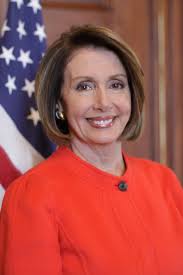
Nancy Pelosi recently said:

Impeachment is so divisive to the country that unless there’s something so compelling and overwhelming and bipartisan, I don’t think we should go down that path, because it divides the country. And he’s just not worth it.

I note, first of all, that Nancy Pelosi ruled out impeaching George Bush, so her reluctance to impeach for clear crimes is consistent with her record. I never understood why others thought that Pelosi would be pro-impeachment. The idea that she’s some partisan fighter is contradicted by her record. Pelosi is what she has: She has beliefs, and those beliefs include that the right is respectable and that left are unrealistic losers (as when she dismissed the Green New Deal).

But let’s leave Pelosi aside for a moment. The Democrats have control of the House. They can impeach. They cannot convict in the Senate, but impeachment is certainly possible.

Why would they want to?

Because it would cripple Trump and the Republicans. During the period of the impeachment, Republicans would be able to get virtually nothing done, except by executive fiat.

This is because the impeachment hearings would completely dominate months of news cycles–constantly hammering in every illegal, crooked, corrupt, and cruel thing that Trump has done.

This is largely a no-lose strategy, if you were actually partisan: There isn’t a lot that House Dems can get through anyway while the Republicans control the Presidency, Senate, and Supreme Court. They can’t actually get most of their legislation through without crippling compromises, so this is fine.

They need to take control the news cycle; to make sure bad legislation doesn’t pass for months; keep Trump tied down fighting impeachment and, on top of that, spend months talking about every shitty thing he has done.

Some may argue impeachment might “backfire,” that Americans “want to see legislators working,” but that sort of argument has been made for decades. Contempt for Congress isn’t going to get much worse (it hardly can), and if working means doing the wrong thing, it’s better not to.

In the face of all the positives, like dragging Trump through the mud, crippling his ability to do anything, and controlling the news cycle, impeachment starts looking, politically, like the obvious thing to do.

And if you actually care about justice, well, Trump is at the very least, a walking emoluments violation. He is clearly profiting from being President. Carter had to sell his peanut farm, Trump hasn’t even put anything into blind trusts and many of his businesses are clearly profiting from his Presidency.

Bush should have been impeached. Trump should be impeached. Ironically, Clinton, who was impeached, shouldn’t have been (lying about consensual sex is a ridiculously low bar).

Pelosi made the wrong decision with Bush. She appears in danger of making the wrong decision here. I doubt she’ll change her mind, but I hope I’m wrong.


The results of the work I do, like this article, are free, but food isn’t, so if you value my work, please DONATE or SUBSCRIBE.
 

The Question Isn’t Manafort’s Short Sentences

So, now we have two sentences for Paul Manafort. According to guidance, they should have added up to between 19 and 24 years, they come in to about seven-and-a-half years.

This is bad.

It isn’t bad because he should be locked away for longer in any grand sense: US sentences are too long. It is bad because, he, a rich, white, and white collar criminal with political connections is being sentenced way below guideline when people are locked away for far longer for crimes like petty theft or possessing marijuana.

It is wrong because it is unequal.

Suddenly, when the criminal is rich, white, and politically connected, judges find that they can and will sentence to less–much less–than mandatory minimums.

What a surprise.

That said, Manafort is 69 and will soon be 70. If these sentences, plus one more still to come, are actually served, there’s a good chance he’ll die in prison.

Unsaid, also, is that these sorts of crimes aren’t usually even prosecuted. The prosecution of these crimes was a political decision, for a political crime. (This isn’t to argue they shouldn’t be prosecuted: Laws should be either enforced or gotten rid of.)

The real question, which won’t be answered until Manafort’s final trial is over, is whether or not Trump will pardon him.

Unless Trump is insane, the answer is yes. If Manafort isn’t pardoned, everyone else will cut deals with Mueller.


The results of the work I do, like this article, are free, but food isn’t, so if you value my work, please DONATE or SUBSCRIBE.

Fight Over Something That Matters; “The Wall” Mostly Doesn’t

So, here’s something people tend to not mention.

A number of walls have already been built along the US-Mexico border.

The Mexico–United States barrier (Spanish: barrera México–Estados Unidos) is a series of vertical barriers along the Mexico–United States border aimed at preventing illegal crossings from Mexico into the United States. [1] The barrier is not one contiguous structure, but a discontinuous series of physical obstructions variously classified as “fences” or “walls.” In between these constructed obstacles, security is provided by a “virtual fence” consisting of sensors, cameras, and other surveillance equipment that is used to dispatch United States Border Patrol agents to suspected migrant crossings. [2] As of January 2009, U.S. Customs and Border Protection reported that it had more than 580 miles (930 km) of barriers in place.[3] The total length of the continental border is 1,954 miles (3,145 km).

That cost, by the way, about six billion dollars. Trump wants seven billion dollars for his wall, which obviously wouldn’t cover the entire border.

The US has built walls along the border before.

What is more important, I think, is that the real problem isn’t a wall or walls. The real problem is that enforcement is extremely cruel. The problem is that this cruelty is mostly bipartisan: Trump has made it worse, but most of the high-profile cases which first came out happened under the Obama administration, which built plenty of camps; they just kept parents and children together in horribly inhumane circumstances.

What should be done is that responsibility for illegal immigrants should be handed back to a reconstituted “Immigration and Naturalization Service“, who ran it until 2003 (after the Homeland Security reorganization shoved through under 9/11 hysteria).

They were a lot less abusive, though the border patrol was still awful.

But the US wants para-militarized law-enforcement, and Americans believe that people should suffer and suffer bad, so we have the current regime. Again, a ton of abuses and cruelty happened under Obama, and the child separation, while a step too far for Democrats (at least in opposition), came on top of policies which were already disgustingly inhumane.

Seven billion is nothing. It isn’t even chump change in terms of the US budget. The wall is not particularly important in real terms of how it will affects people. It is a symbolic issue: Trump made it his centerpiece, so the Democrats oppose it.

Indeed, the Democratic compromise was to keep funding ICE, but not fund the wall.

This is symbolic politics. Trump’s signature campaign promise was “The Wall.” It doesn’t cost much, it won’t make immigration enforcement noticeably more cruel, but not funding it is a win.

Is it a win worth a government shutdown? Maybe. But crocodile tears about the suffering of civil servants from Dems fighting over a largely symbolic issue fail to impress. If they were actually fighting over stopping child separation, ending camps, or truly getting rid of the current regime and going back to something more humane, that would be worth some suffering, because it would end suffering.

Is this?


The results of the work I do, like this article, are free, but food isn’t, so if you value my work, please DONATE or SUBSCRIBE.

Is Trump Right to Shutdown the Government over His Wall?

Yeah, I think he is.

Bear with me, I think the wall is stupid and mean. There aren’t actually a ton of emigrants coming any more, and there haven’t been since the early 00’s. It’s not a real crisis. (It never really was.)

And the anti-immigrant movement is based on cruelty. It was based on cruelty under Obama and Bush as well. A lot of outrages that came to light in the early Trump reign were actually things that happened under Obama. That said, Trump has, as with so many things, made it worse.

But Trump campaigned on the wall. If he had a main any campaign promise at all, it was to build the wall.

People voted for him, elected him, expecting him to build the wall.

People should, I believe, get what they vote for. At the least they should be able to expect the people they voted for to fight for whatever they promised.

Trump is doing that, and I would go so far as to say he should do it.

Other politicians, who promised to oppose him, should do so, though I fear the hypocrisy meter is pretty high on both Republicans and Democrats on this issue: Many who oppose him now have voted for border walls in the past, there’s plenty of already existing wall, etc.

Is all this worth shutting the government down over? Not to me, not to most of my readers, I’m sure.

But it was Trump’s main promise, and he should fight for it.


The results of the work I do, like this article, are free, but food isn’t, so if you value my work, please DONATE or SUBSCRIBE.

Trump the Peacemaker?

So, Trump recently said the US would be withdrawing from Syria. Now, we have news that Trump has ordered the Pentagon to draw up plans for leaving Afghanistan.

During the 2016 election, I refused to endorse either candidate; I considered Clinton a war-mongerer, with a non-zero chance of starting a war with Russia over Syria. Trump, was, of course, beyond the pale in so many ways.

However, as I told an American friend, by 2016 I was done prioritizing American lives and well-being over those of other nationalities. Before then, I had, slightly, because I believed that if the US could be turned around, as the hegemonic power, that would help everyone else.

But by 2016 it was clear that the US was basically hopeless. Everyone’s blood is the same color, everyone suffers the same. Bad things happening domestically in the US do not trump American mass-murder and terrible policy to other nations.

Now I don’t know if Trump will actually withdraw from Syria or Afghanistan; just as I don’t know how real the North Korean negotiations will turn out to be. (I just want a peace treaty out of that mess.)

But Trump has a chance to come out of this looking a lot better than Obama. All he has to do is stop a couple wars, and not start a war.

Something Obama (Libya) was unable to do.

Non-American lives matter.

Oh, and withdrawing will save some American lives, too, though a trivial number compared to how many foreigners’ lives it will save.

Plus it will correct a monumental geopolitical error. Bin Laden’s entire plan was to get US boots on the ground, prove the US military could be be beaten, and bleed the US dry. Americans, in their hubris, walked right into his trap.

Maybe time to step out of it.


The results of the work I do, like this article, are free, but food isn’t, so if you value my work, please DONATE or SUBSCRIBE.

Putin’s Control of Trump and the Intermediate-Range Nuclear Forces Treaty

There is a meme in the resistance that Trump is Putin’s “puppet.”

This meme’s explanatory power is weak.

Take Trump’s announcement that he will pull the US out of the Intermediate-Range Nuclear Forces Treaty: This isn’t something Russia, or Putin, wants.

Trump admires Putin, and Putin provided some support for Trump’s election, hoping that would lead to the reduction or removal of sanctions (spoiler: it didn’t), but Trump doesn’t do everything Putin wants, or not do everything Putin doesn’t want.

What Russia wants, simply put, is a sphere of influence and to feel secure within that sphere of influence. This desire isn’t a particularly comfy desire if you’re near Russia (and weak–Europe is not weak). But it is no worse the US’s desire to have a sphere, as any Caribbean, Latin American, South American, many Asian, European, African, Middle Eastern nations have learned.

In fact, it’s a lot less scary unless you’re close by.

Russia doesn’t have 800 bases around the world. It has invaded, sanctioned, and overthrown less countries than the US in the last 30 years, and so on.

That doesn’t mean Putin is a good guy, or Russia is a “good” nation, but it’s certainly less evil, in terms of external body count and, heck, even internal numbers of people locked up, than the United States.

“Lesser Evil” isn’t much of a rallying cry, as the Democrats refuse to learn, but it does mean that when the US treats Russia as the horrible evil enemy, it falls flat.

The US is in what looks like serious decline. Rather than interfering in every one else’s business, it should mind its own business. If there is a formal defensive alliance: Live up to it. Otherwise, butt out. A great deal of evil in the world would be weakened and likely defeated, if the US would simply stop propping it up. This is true of Saudi Arabia and Israeli apartheid (and yeah, it is now formally apartheid whatever pretense otherwise) as well as many other evils.

A “good” country in the world helps other nations, doesn’t injure other nations and doesn’t support evil nations, but does not, as Adams said, go looking for monsters to slay.

Grant to others the right of self-determination. Do not support evil. Do not interfere in internal affairs. Do defend actual allies. That is all.


The results of the work I do, like this article, are free, but food isn’t, so if you value my work, please DONATE or SUBSCRIBE.

Trump’s Continued Collision with the Federal Reserve

Back around Trump’s election, I said that there would be a collision between him and the Federal Reserve. At the time, it was run by Yellen.

The fact is that the people who elected Trump aren’t feeling good. To make them feel good, Trump is going to have get the official unemployment rate lower than it is now, at least under four percent, and hopefully to three percent or lower and hold it there for some time, at least two or three years.

This stuff takes time to ripple through the economy, and it takes time for a tight labor market to push employers to both raise wages and to hire people who they consider marginal.

If the Federal Reserve raises rates if/when Trump’s policies (“fiscal,” in the above) start to work, they will be making sure he can’t deliver to his constituency.

This is a direct collision course.

Now let me say something simple. The Federal Reserve, for over 30 years, has deliberately crushed wages. This was policy. Policy.

So, Trump hired Powell, and Powell is doing what Yellen would have done. Trump, on October 11th, said that he wouldn’t fire Powell, but was only disappointed.

It’s unclear whether or not Trump can fire Powell, however he can fire all other members of the Federal Reserve board for non-performance of duties. The case isn’t as clear as back in, say, 2009, but the economy still isn’t good for large parts of America, a case can certainly be made.

More to the point, Trump should.

Yes, Trump is the source of all evil and anything and everything he does should be opposed, I know, but bear with me: The Federal Reserve should not be insulated from pressure from elected officials.

I know that orthodoxy says it should, but the fact is that, since 1979, the Federal Reserve has raised interest rates whenever it looked like wages were going to rise faster than inflation. The Federal Reserve, in other words, has crushed wages.

This is bad. It is at the heart of why we have the rise of the right, and so many other problems. Vast inequality, in democracies, always leads to political instability, and in democracies the purpose of the economy should be to create a good life for everyone, anyway.

Trump ain’t a good guy, but wages aren’t increasing for ordinary people. That means that whatever the nominal unemployment rate is, the US isn’t actually at full employment. If it was, there would be rising wages. It is that simple. To raise interest rates before there are even significant wage increases is malpractice, even by the usual standards of monetary policy–and the usual standards are already malpractice.

Just because one despises Trump, one should not allow the major part of economic management be run by people who despise ordinary people receiving wage increases, or, indeed, by “independent bodies.” Democracy means elected officials having control over real policy.

So, I hope Trump fires a bunch of Federal reserve members, I hope it goes to the Supreme Court, and I hope that those firings are upheld.


The results of the work I do, like this article, are free, but food isn’t, so if you value my work, please DONATE or SUBSCRIBE.

Why Did The New Yorker Want Steve Bannon to Headline Their Festival?

Steve Bannon

So, Bannon was due to headline a New Yorker festival. People became upset and now he isn’t.

Why was he invited in the first place?

I’m not one of those who’ll argue that Bannon isn’t smart. He is–very much so. But there are plenty of very smart, and indeed smarter, people on the left. Chomsky has never headlined for the New Yorker, and he’s a straight-up genius.

Bannon was invited because what the alt-right/fascists want is something centrists can live with. Fascists are big believers in corporations. Under the Nazis, executive wages soared. They crushed unions and depressed wages. They managed unemployment by choosing entire classes of people to make non-people, and the rest of the population mostly got a job.

All of this is stuff that centrists can live with. Elevated executive compensation, pro-corporate policies, keeping unions, and the left down.

Remember, always, that Jews weren’t killed first. Socialists and anarchists were.

So the bottom line is that centrists are okay with fascists because fascists are pro-corporate and executive wealth.

(Oh, Bannon says the right things about the working class, but then Trump gives a huge tax cut to rich people and corporations.)

On the other hand, the left-wing is hostile to large corporations and high executive compensation. At the least, the left would highly regulate corporations and break many of them up, while slapping on 90 percent marginal tax rates and punitive estate taxes.

At the most, some left-wingers would nationalize corporations wholesale and redistribute wealth, or they might force employee ownership of corporations or some version of that.

All actual left-wingers would end the obscene system of over-payment in corporate America.

Left-wingers are an existential threat to centrists because centrists are, substantially, supporters of the status quo. The state of the US and the world is (or was before Trump) essentially good to them. The parts of the status quo that right-wingers want to overthrow don’t hurt centrists. The parts of the status quo that left-wingers want to overthrow do.

So Bannon is okay with them. They don’t really believe he means his class war rhetoric (Hitler didn’t). They are sure that they’ll still be okay under him.

They might not be right. But that’s their bet.

It’s a bet that has been made over and over again since WWII. US elites have always been willing to support right-wingers over left-wingers. You see it in almost every Latin American country. You saw it in Greece, in Iran, and so on, and you’ve seen it domestically–repeatedly.

The center prefers the center. But they’ll always choose the right over the left on anything that even slightly smells of economics, because they want to retain their wealth and the right will allow that and the left won’t.


The results of the work I do, like this article, are free, but food isn’t, so if you value my work, please DONATE or SUBSCRIBE.

Page 12 of 21

Powered by WordPress & Theme by Anders Norén